PROJECT WITH GEORGIA
|
Lot 1: Food Safety and Sanitary and Phytosanitary Measures Component |
|
|
Project Name : Healthy Soil for Food Safety as a Foundation for the Development of Organic Farming and Agritourism PROJECT LEADER: Ilia State University, Tbilisi |
PROJECT OBJECTIVES :
- To improve organic farming for food safety as a means of protecting the local population and agritourism consumers.
- To raise awareness within the selected target regions regarding healthy soil and the strengthening of organic farms as part of the green economy.
- To enhance the role of organic farms in promoting agritourism within the target regions.
- To establish local agro-organizational groups (LAGs) to serve as effective bridges between local municipalities.
- To construct greenhouses in a natural setting, utilizing renewable/solar energy systems.
- Strengthen capacity building and create employment opportunities in the target regions to improve livelihoods by increasing the share of agricultural exports within the framework of the DCFTA.
Target Group(s)
Groups of people, communities, farmers, stakeholders, women/youth, and the elderly—including residents, refugees, eco-migrants, or internally displaced persons—residing in the Kakheti and Racha-Lechkhumi–Kvemo Svaneti regions.
FINAL BENEFICIARIES
Citizens from the two regions belonging to the target groups who have participated in training sessions and other activities, acquired relevant knowledge, and are motivated to contribute to the development of organic farming and agritourism.
EXPECTED RESULTS
- Improvement of the regulatory framework for food safety, serving as a foundation for the development of organic farming and agritourism.
- Enhanced capacity and employment opportunities encourage final beneficiaries to apply the knowledge they have acquired to explore organic farming.
- Strengthening of the ties between target groups, Local Action Groups, and government authorities, creating a solid basis for synergistic cooperation.
- Increased sustainability of food safety through the establishment of long-term advocacy and oversight.
The project will achieve its objectives through the synergy of the applicants, demonstrated by the creation and implementation of engaging activities—such as training sessions, consultations, experience exchanges, seminars, and outdoor events. It will raise public awareness regarding technologies for processing organic waste and producing eco-friendly bio-products, thereby helping to transform household waste into a resource that serves the community and addresses critical challenges.
The project focuses on organic crop protection using “plant energy networks” (PENs) to eliminate the use of chemicals, thereby ensuring environmentally clean production. An innovative feature of the project is its integrated plant protection system, which combines biological pest control with vermitechnologies.
Organic farming is one of the most attractive areas for those interested in agritourism. What is the basis for the interdisciplinary nature of the project presented here? It is widely recognized that food, agriculture, and tourism (FAT) are closely interconnected.
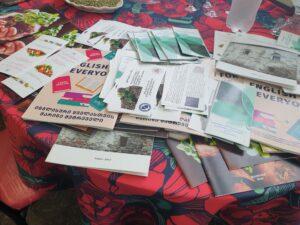
As part of the project, the study “Seven Mechanisms for Poverty Alleviation through Engagement in Rural Tourism” was compiled and published in both Georgia and Bulgaria.
https://thexperts.bg/article/prekratyavane-na-bednostta-chrez-razvitie-na-selskiya-turizm


Final Conference, October 1–6 , 2026
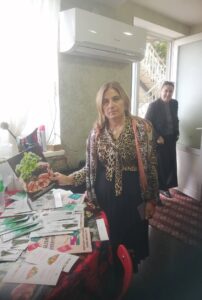
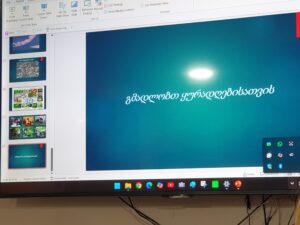
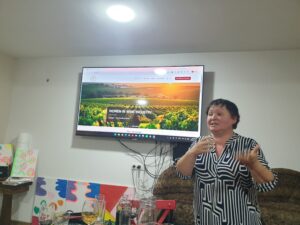
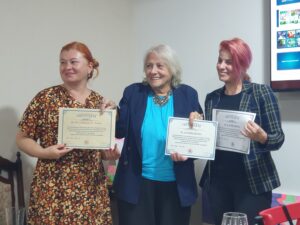
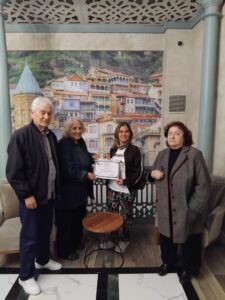
We met with all our beneficiaries. Together with lecturers from Ilia State University—Mzia Koka, Oleg Gorgadze, and Marina Metreveli—we discussed the benefits of this project and its practical application among the target group. We also presented certificates for participation in the project.
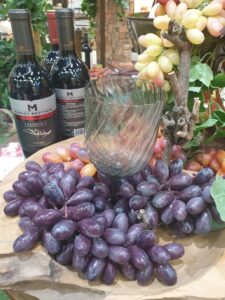
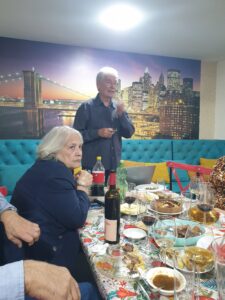
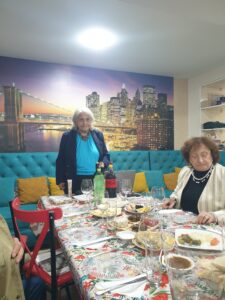
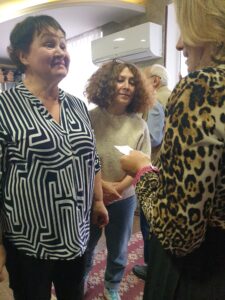
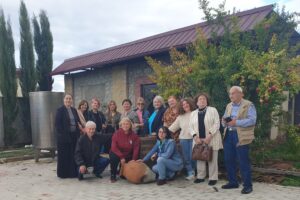
Some of the beneficiaries were members of a remarkable association of female winemakers: “Women in the Wine Industry” – Tbilisi. The meeting took place in the Chumlaki area (Gurjaani) and was initiated by Mariet Marina Kakiashvili-Ruadze, an organic wine producer. It was incredibly valuable for me to learn more about the challenges and successes they have encountered along their journey. Women in the viticulture and winemaking sector bring a unique elegance, precision, and character to the industry—qualities that are clearly evident in every drop of the wine they produce. Our conversations took place in an atmosphere of hospitality, professionalism, and passion.
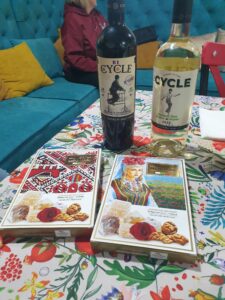
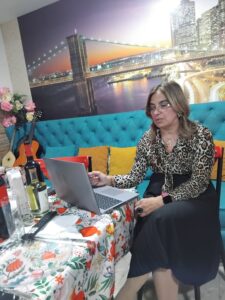
I had the opportunity to present our wonderful wines and product lines—created by https://sisindustries.bg/ under the @Minkov Brothers brand, an undisputed leader in both the Bulgarian and global markets. Crafted using modern technology, each series possesses its own distinct, well-defined character. We truly impressed the ladies with the variety and quality of the wines from my homeland!
Wine has the power to bring people together, but when it is created by inspiring women, it carries a special kind of magic!
https://wiwi.ge/ – Heartfelt thanks to the wonderful women producers for the inspiring meeting, the stories shared, and the exceptional wines we tasted. Your passion, precision, and hard work are proof that the power of women in the wine sector works wonders.
I believe this is just the beginning of a fruitful future collaboration and new shared successes.